

 German Cockroaches in Sydney Apartments: A Complete 2026 Guide

Published by BugFree Pest Control | Sydney’s Local Pest Experts Since 1990 | NSW EPA Licence: 5074197 | Updated: April 2026
Written with input from BugFree’s senior pest management technicians, who have treated German cockroach infestations across hundreds of Sydney apartments and strata buildings. All biological and health information is sourced from peer-reviewed research and government health authorities.
If you live in a Sydney apartment and you have spotted small, fast, light-brown cockroaches darting under the fridge or behind the dishwasher, this post is for you.
What you are dealing with is almost certainly Blattella germanica, the German cockroach. And it is not going away with a can of Mortein.
This guide covers exactly why German cockroaches are different from every other pest you have dealt with, why spray-first thinking makes infestations worse, and what actually works for both renters and property owners.
German Cockroaches vs Other Cockroaches: Why This One Is Different
Most Sydneysiders are familiar with the large, slow, reddish-brown cockroach that stumbles in from the garden on warm nights. That is the Australian cockroach, or in some areas, the American cockroach. Disgusting, yes. But it is fundamentally an outdoor pest that wanders inside.
The German cockroach is a completely different animal.
It lives exclusively indoors. It does not come in from the garden. It does not wander inside by accident. According to the Australian Museum, the German cockroach came originally from Africa and has lived alongside humans for over 2,000 years. It has essentially evolved to thrive inside our buildings.
Here is what makes it the most serious cockroach pest in Sydney apartments:
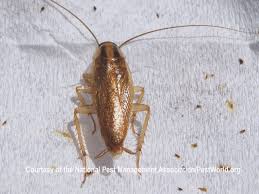
- Size: 12-15 mm. Small enough to fit inside door hinges, drawer runners, the gap around a screw head, and the motor cavity of your dishwasher.
- Breeding rate: According to the Australian Museum, one female can produce up to 20,000 young annually. Each egg case carries 30-48 eggs, and a new generation can be ready to breed within 60 days.
- Habitat: They live inside your appliances, not in your walls. The fridge motor. The dishwasher cavity. Behind the microwave. Inside hinges and drawer runners. This is their home, not a transit route.
- Behaviour: They are neophobic, meaning they are instinctively suspicious of new objects and substances in their environment. This is precisely why DIY gel and bait products placed in the wrong spots consistently fail.
For a comparison of German cockroaches against other species found in Sydney, see BugFree’s cockroach pest control guide.
Why Apartments Are the Worst Case Scenario
German cockroaches are not just a problem for one unit. They are a building problem.
In strata buildings, German cockroaches move between apartments through shared infrastructure — plumbing risers, service ducts, cable penetrations, and the gaps around pipes under sinks. One heavily infested unit on the third floor becomes a source population for the entire building over time.
Multiple r/sydney threads make this point repeatedly. In one widely shared post titled “Sudden influx of German cockroaches in my unit”, a commenter with 81 replies put it plainly:
“Apartments are hard because if anyone else in your building has unsanitary habits they can bring roaches in for the whole block. No point doing all the work in your unit if the whole floor is infested.”
Another comment in the same thread:
“I had a bad infestation last year, the gels that previously worked didn’t anymore.”
This is a documented phenomenon called bait aversion. German cockroach populations that survive repeated gel bait exposure can develop resistance to specific active ingredients. This is one reason professional treatments rotate between gel families, something a homeowner buying a single tube off eBay cannot replicate.
The strata apartment environment compounds every aspect of the problem:
- Shared food waste infrastructure — bin rooms and chutes are a permanent food source adjacent to residential floors
- Shared plumbing heat — warm pipe runs through walls creates ideal temperature corridors
- High turnover — new tenants introduce new infestations, often unknowingly, through cardboard boxes and second-hand appliances
- Inconsistent treatment — if six units are treated and one is not, the untreated unit repopulates the whole building
If you are managing a strata building, BugFree offers strata pest control programs that treat the whole building, not individual units in isolation.
The Health Risk Nobody Talks About
German cockroaches are not just unpleasant. They are a genuine health hazard, particularly for children and people with asthma or respiratory conditions.
According to research published in the New England Journal of Medicine, children who were both allergic to cockroach allergens and exposed to high levels of them had significantly more hospitalisations, more unscheduled medical visits, more wheezy days, and more missed school days than children without that exposure. The study followed 476 children across eight US cities.
Cockroach allergens come from three sources: droppings, shed skins (exuviae), and decomposing bodies. As noted by Safe Pest Control’s research summary, cockroach allergens contribute to poorer asthma outcomes, particularly in inner-city children, and infants exposed to these allergens in the first three months of life have a higher risk of developing respiratory allergic disease.
In an apartment block with a significant infestation, these allergens become airborne through everyday disturbance, such as opening cupboards, running the dishwasher, and moving appliances. You do not need to see a cockroach to be exposed.
Beyond allergens, German cockroaches carry and transmit Salmonella, E. coli, and Staphylococcus. They travel through drains and bin areas before returning to kitchen surfaces. The contamination is not theoretical.
For guidance on keeping your home safe for children and pets during and after treatment, read BugFree’s FAQ on whether pest control sprays are safe around children and pets.
Why Spraying Does Not Work on German Cockroaches
This is the most important thing in this entire post.
Surface sprays, aerosols, foggers, and bombs are the instinctive response to a cockroach sighting. They are also one of the fastest ways to make a German cockroach infestation harder to treat.
Here is why.
German cockroaches live inside tight cavities: appliance motors, hinge gaps, drawer runners, and the space between a kickboard and the floor. A surface spray applied to a benchtop, a floor, or a wall does not reach these spaces. It makes the visible surfaces smell like pesticide, which causes German cockroaches to move deeper into harbourage or relocate to adjacent areas — including adjacent units.
Worse, if you plan to get professional treatment after using retail sprays, the residue actively interferes with gel bait. German cockroaches that have been exposed to spray residue become reluctant to approach fresh bait placements. BugFree’s own cockroach service page is explicit on this point:
“Do not spray retail aerosols over benches, hinges, or kickboards if you plan to get professional help; broad sprays can repel German cockroaches from the gel baits we apply and slow results.”
The r/sydney community has figured this out through painful experience. In one Inner West apartment thread, a commenter described spending weeks on spray with no result before switching to professional-grade gels:
“I went through spray, the plastic baits and nothing worked until I started laying down the gels I bought off Amazon. Took about 2 weeks to see a drop off in numbers.”
And in perhaps the most honest summary of the DIY experience, from the “Desperately need help” thread with 112 replies:
“Nothing works on German cockroaches apart from chemicals you need a licence to access. I think I have to admit defeat and hire pros because I have spent upwards of half a grand now; from gel baits to glue traps to spray and they’re still coming.”
What Actually Works: Gel Bait, IGR, and Why Placement Is Everything
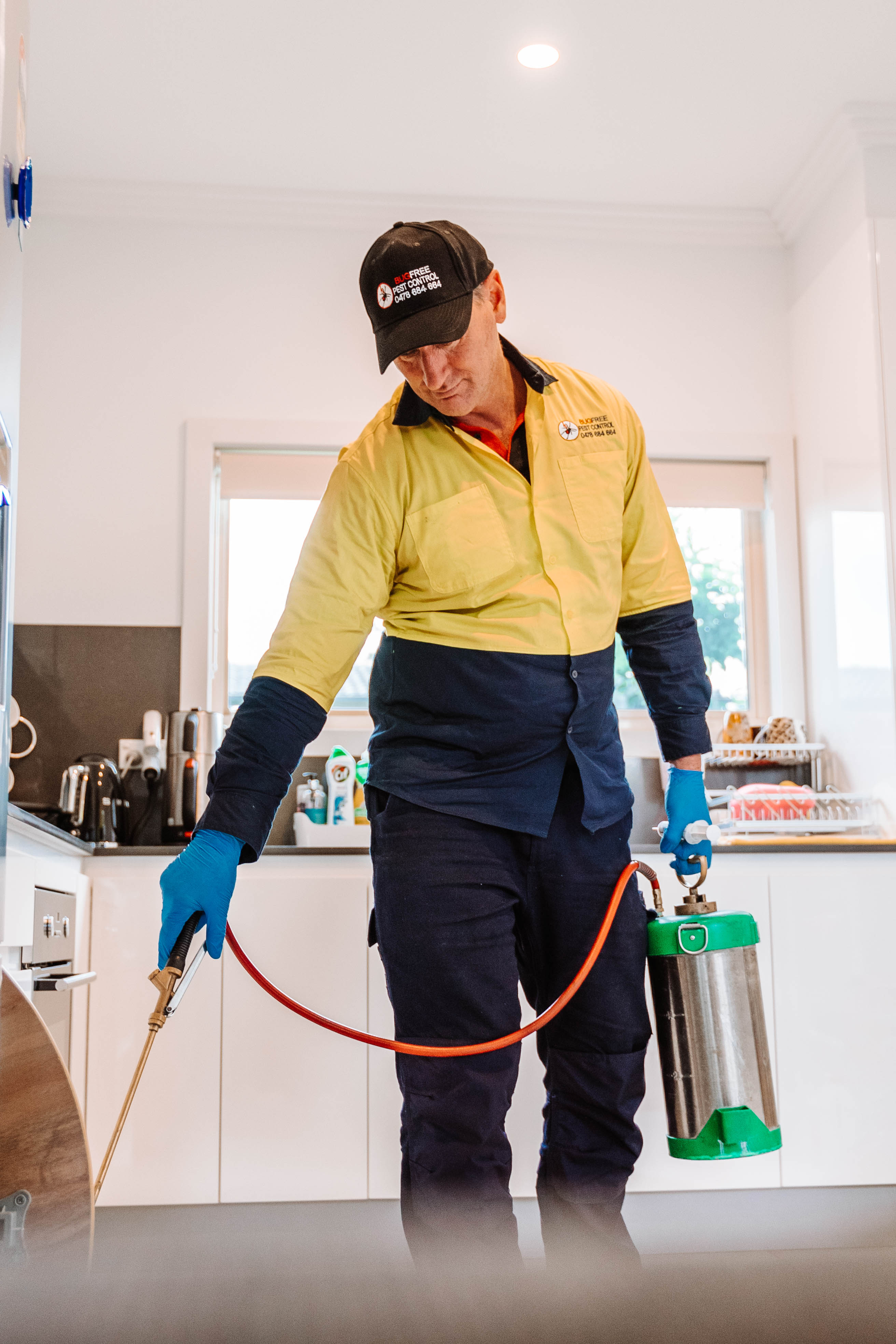
Professional German cockroach treatment is built around three components working together.
1. Crack-and-Crevice Gel Bait
Gel bait is applied in tiny placements, a matchhead-sized amount directly inside the spaces where cockroaches live: hinges, drawer runners, the back of the dishwasher cavity, pipe penetrations under the sink, appliance motor housings.
The gel works because cockroaches consume it and carry the active ingredient back to the harbourage, where it spreads to others through contact and cannibalism. This is what kills the colony, not just the individuals you can see.
Effective placement requires knowing exactly where German cockroaches are in your specific property. That knowledge comes from a proper inspection, not from squeezing gel around bench edges.
BugFree rotates between gel formulations with different active ingredient families to prevent bait aversion — a documented problem in apartment buildings where the same products have been used repeatedly.
2. Insect Growth Regulator (IGR)
An IGR does not kill adult cockroaches. It prevents nymphs from maturing into breeding adults, which breaks the reproductive cycle. Without an IGR, a gel bait program kills the adults but leaves the next generation coming through. A full treatment uses both.
3. Targeted Dust in Voids
Insecticidal dust is applied to kickboard recesses and service penetrations, the same routes cockroaches use to travel between units. It stays active in these spaces long after liquid treatments have degraded.
This three-component approach is what separates a professional German cockroach treatment from anything available over the counter. For a full breakdown of how BugFree treats cockroach infestations across species types, see the cockroach pest control page.
How to Spot a German Cockroach Infestation Early
Do not wait until you see cockroaches in daylight. By then, the infestation is already significant. German cockroaches are nocturnal and photophobic. If they are visible in the daytime, they have been pushed out of harbourage by overcrowding.
Early indicators to look for right now:
- Fine black specks around door hinges, drawer runners, and screw heads. This is frass (droppings). It looks like ground black pepper.
- Shed skins (exuviae) in cupboard corners, behind appliances, and under the sink. They are translucent brown husks in the rough shape of a cockroach nymph.
- Tan or brown egg cases (oothecae) about the size of a grain of rice, tucked into tight crevices. Each one contains 30-48 eggs.
- Musty, oily odour near warm appliances. A strong smell indicates a well-established harbourage.
- Smear marks — dark, greasy trails along habitual run lines near skirting boards and kickboards.
The night test: Turn the kitchen lights off for 15-20 minutes, then enter quietly and switch them on. Multiple nymphs scattering from the dishwasher, fridge motor area, or cabinet hinges is a strong indicator.
For a full checklist on identifying rodents and other pest signs, see BugFree’s pest information library.
What to Do If You Are a Renter
Responsibility for pest control in rental properties is a common point of confusion. In NSW, the general rule is that landlords are responsible for pest infestations that exist at the start of a tenancy or that result from structural issues with the property (such as gaps around pipes). Tenants are responsible for infestations they cause through poor hygiene or by introducing pests.
In practice, German cockroach infestations in apartments are almost always a building-level issue — meaning the infestation is coming through shared infrastructure from other units. This makes it a property management responsibility.
BugFree’s post on who is responsible for pest control in rental properties walks through the NSW framework in detail. If your landlord or strata manager is not acting, that post gives you the information you need to push back.
Preparation Before BugFree Arrives
To get the best results from a professional treatment, prepare your property as follows:
- Clear the bench tops and empty the lower half of the kitchen cupboards
- Pull movable appliances 20-30 cm from the walls where safe
- Bag and remove cardboard boxes. Cockroaches use corrugated cardboard as a nesting material
- Do not use retail aerosols or surface sprays in the kitchen in the days before treatment
- Secure pets during the service visit
After treatment, keep surfaces dry overnight, avoid wiping down gel placements, keep bins sealed and clean, and do not apply retail sprays on or near bait locations.
Sydney Suburbs and Property Types at Highest Risk
German cockroaches are found across all of Sydney, but certain property types and areas see disproportionate activity.
Inner West and Eastern Suburbs terrace conversions and older apartment blocks
Buildings with original plumbing, shared walls, and poor pipe sealing are the highest-risk properties. The r/sydney Leichhardt infestation thread describes exactly this pattern.
High-density strata in Parramatta, Liverpool, and Blacktown
New high-density developments with shared bin rooms and food delivery traffic create sustained pressure points. Delivery packaging and cardboard are a primary introduction route.
Properties above or adjacent to food businesses (Surry Hills, Newtown, Chippendale, CBD fringe)
Commercial kitchen populations put constant pressure on residential units above or beside them. Professional treatment and proofing of pipe penetrations is the only long-term answer.
BugFree services all of these areas. See the full Sydney service areas page to confirm your suburb.
Frequently Asked Questions
Are German cockroaches the same as the big brown ones I see at night?
No. The large reddish-brown cockroach is the Australian or American cockroach, an outdoor species that wanders inside. The German cockroach is small (12-15 mm), pale brown with two dark stripes behind the head, and lives exclusively indoors. They require entirely different treatments.
Can I get rid of German cockroaches myself?
For a very early-stage infestation, one or two sightings, no visible frass or egg cases, professional-grade gel baits such as Advion or Maxforce FC Magnum, applied precisely in harbourage areas, can be effective. However, for any established infestation with visible droppings, shed skins, or egg cases, professional treatment is the practical standard. The bait aversion issue in apartments that have had repeated amateur treatment makes professional intervention the faster and more reliable outcome.
How long does professional treatment take to work?
You will typically see a significant reduction in activity within 7-14 days as adults consume the bait and carry it back to the colony. The IGR component then prevents surviving nymphs from reaching breeding age. A follow-up inspection at 4-6 weeks confirms results and addresses any residual activity.
Will treating my unit solve the problem if my neighbours are infested?
It will significantly reduce activity in your unit. However, if the building has an untreated source population, re-invasion is likely over time. This is why BugFree recommends raising the issue with strata management and pursuing a whole-building treatment. Our strata pest control service is designed exactly for this situation.
Is the treatment safe for my children and pets?
Yes. BugFree’s German cockroach treatment uses crack-and-crevice gel applications placed inside cavities, not on open surfaces. Children and pets can re-enter treated areas once surfaces are dry, typically within one to two hours. See our full answer on pest control safety for children and pets.
What is the cost of professional German cockroach treatment in Sydney?
Treatment cost depends on the size of the property and the severity of the infestation. BugFree quotes before starting, no hidden costs. Book online or call 1300 855 548 for a quote.
Book a German Cockroach Treatment
If you are seeing signs of German cockroaches in your Sydney apartment, act before the infestation grows. A single breeding pair can produce thousands of offspring within a year. The longer treatment is delayed, the more established the harbourage becomes, and the more likely bait aversion develops in the population.
BugFree has been treating German cockroach infestations in Sydney homes and apartments since 1990. We are a family-owned business, not a franchise or call centre. When you call 1300 855 548, you speak directly to our Sydney team. Our technicians hold NSW EPA Licence 5074197 and are trained in targeted gel application, IGR use, and bait rotation, not just spray-and-go.
Book online or call 1300 855 548.
We service every Sydney suburb seven days a week from 7 am to 8 pm. Find your suburb.
BugFree Pest Control holds NSW EPA Licence 5074197. All products used are APVMA-registered and applied by licensed technicians under Australian Pest Management Standards
Residential & Domestic
Professional services with affordable Prices
Our fully licensed and experienced technicians will provide you and your family members with a pest control treatment catered for you and your home.

Commercial Pest Control
100% environmentally safe and friendly
All our chemical treatments are approved under Australian Standards so you can be confident of a safe and quality outcome.