

 Autumn Rodent Season 2026: Why This Year Is Different for Sydney Homes

Published by BugFree Pest Control | Sydney’s Local Pest Experts Since 1990 | NSW EPA Licence: 5074197 | Updated: April 2026
Written with input from BugFree’s senior pest management technicians, who have over 30 years of experience treating rodent infestations across Greater Sydney. All regulatory information is sourced directly from the Australian Pesticides and Veterinary Medicines Authority (APVMA).
Every autumn, rats and mice move indoors. That is not new. What is new in 2026 is that the products most Sydney homeowners have relied on to deal with them are now off supermarket shelves.
Two things are happening at the same time, and together they change how you need to think about rodent control this season. If you want the full regulatory breakdown, read our complete guide to Australia’s 2026 rat bait ban. This post focuses on what that ban means specifically for the autumn rodent season — and what you should do about it right now.
What Changes Every Autumn in Sydney (and Why It Starts Now)
Sydney’s autumn runs from March through May, and it is the single busiest period of the year for rodent call-outs at BugFree. Not because rats and mice are more active outdoors, but it is the opposite. As temperatures drop, rodents actively seek warmth, food, and shelter inside structures.
Roof rats (black rats) are climbers. They enter through gaps around pipes, cables, roof vents, and corrugated iron edges. They nest in roof voids and ceiling insulation, which is why the first sign most Sydney homeowners get is scratching sounds at night.
Norway rats (brown rats) are burrowers. They enter through subfloor vents, foundation cracks, and gaps at ground level. They establish nests under floors and behind wall cavities, staying close to kitchens and pantries.
House mice need a gap roughly the size of a 5-cent coin to enter a property. Once inside, a breeding pair can produce up to 60 offspring in 90 days. For a deeper look at each species and how they differ, see our guide on types of rodent pests.
This migration is not random. It is predictable, it happens every year, and it is already underway. The April to June window is when rodents establish nesting sites. By the time you hear scratching or find droppings, a nest is already active. Read our blog on signs of rodents in your home if you want to know exactly what to look for.
The critical window for rodent control is before you see signs, not after.
What Is Different in 2026
On 12 March 2026, the Australian Pesticides and Veterinary Medicines Authority (APVMA) certified that second-generation anticoagulant rodenticides (SGARs) must be classified as restricted chemical products under Australian law. The suspension of all SGAR product registrations took effect from 24 March 2026.
In plain terms: the most powerful rat baits sold at Bunnings, Woolworths, Coles, Mitre 10, and IGA are now restricted to licensed pest controllers only.
What Are SGARs?
SGARs work by preventing blood from clotting. They are highly effective at killing rodents but cause a significant secondary poisoning problem. When a predator, like an owl, a kookaburra, or a neighbour’s cat, eats a rodent that has consumed SGAR bait, the toxin transfers up the food chain. According to the APVMA’s rodenticide review, SGARs can remain active in a dead rodent’s body for up to 12 months.
As ABC News reported in March 2026, wildlife carers had been calling for this ban for years, with owls and native predators dying from secondary poisoning after eating baited rodents. APVMA chief executive Scott Hansen confirmed the change would mean these products “will only be available for sale to people who have demonstrated competencies and experience.”
The five active ingredients now restricted are brodifacoum, bromadiolone, difenacoum, difethialone, and flocoumafen. If any of these words appear on the back of a product in your garage, it is an SGAR.
What This Means for Sydney Homeowners
If you have previously managed a mild rodent problem by picking up bait from the hardware store, that option is gone. The Guardian’s coverage of the ruling confirmed that Woolworths, Coles, and Bunnings are all required to remove SGAR products from general retail shelves. A Woolworths spokesperson said the chain was consulting suppliers “to understand the implications.”
Weaker first-generation rodenticides may still be available to the public in the short term, but they require multiple feeds to be effective and are significantly less reliable against established infestations.
For an active infestation, a licensed professional is now the most practical path forward.
The Signs You Have Rodents This Autumn
Do not wait for visual confirmation. Rodents are nocturnal and stay hidden. By the time you see one, you have a significant population.
Look for these early indicators:
- Scratching or scurrying sounds coming from the ceiling or walls, typically at night between 10 pm and 2 am
- Droppings near the back of pantry shelves, behind the fridge, or in cupboard corners. Rat droppings are roughly 12-18 mm. Mouse droppings are 3-6 mm, dark, and pointed at both ends.
- Gnaw marks on food packaging, timber skirting boards, or electrical cable sheathing
- Grease smear marks along skirting boards or beams rodents follow the same routes repeatedly and leave body oils on surfaces
- A distinct ammonia smell in enclosed spaces, such as roof voids or under cabinets
- Chewed insulation in the roof or around pipes
- Pet behaviour changes — dogs and cats will often fixate on a wall or ceiling area where rodents are nesting
For a comprehensive checklist, read our post on signs of rodents in your home. If you have already found droppings in the kitchen specifically, our guide on rodents in your kitchen or pantry walks you through immediate steps.
Why You Should Not Wait Until Winter
Autumn is the time to act. Winter is the time it gets worse.
Once rodents establish nesting sites in April and May, they spend the winter breeding. A roof rat pair can produce 40 or more offspring per year. By August, what started as two or three rodents entering through a single gap can be a significant colony.
Rodents in a roof void or wall cavity cause three types of damage:
- Structural damage — gnawing through timber beams, roof insulation, and plastic pipes
- Fire risk — chewed electrical wiring is one of the leading causes of house fires in Australia. As our guide on how to get rid of rats fast explains, rodents gnaw continuously because their teeth never stop growing.
- Health risk — rodents carry Salmonella, Leptospirosis (Weil’s disease), and other pathogens through their droppings, urine, and direct contact with food preparation surfaces.
For a broader look at what happens to pests as winter sets in and which ones become more active, see our post on understanding the fate of pests during winter.
An early autumn treatment is significantly less expensive and less disruptive than a full winter infestation job.
What Professional Rodent Control Looks Like in 2026
Given the APVMA restrictions, it is worth understanding what licensed pest controllers can use that homeowners cannot.
BugFree’s rodent control service combines three elements:
1. Inspection and entry point identification
A thorough inspection of the roof void, subfloor, exterior perimeter, and interior of the property to identify active signs, nesting areas, and all potential entry points. We use thermal imaging cameras where appropriate, which is useful for detecting nesting activity inside wall cavities without destructive investigation.
2. Professional-grade baiting with tamper-resistant stations
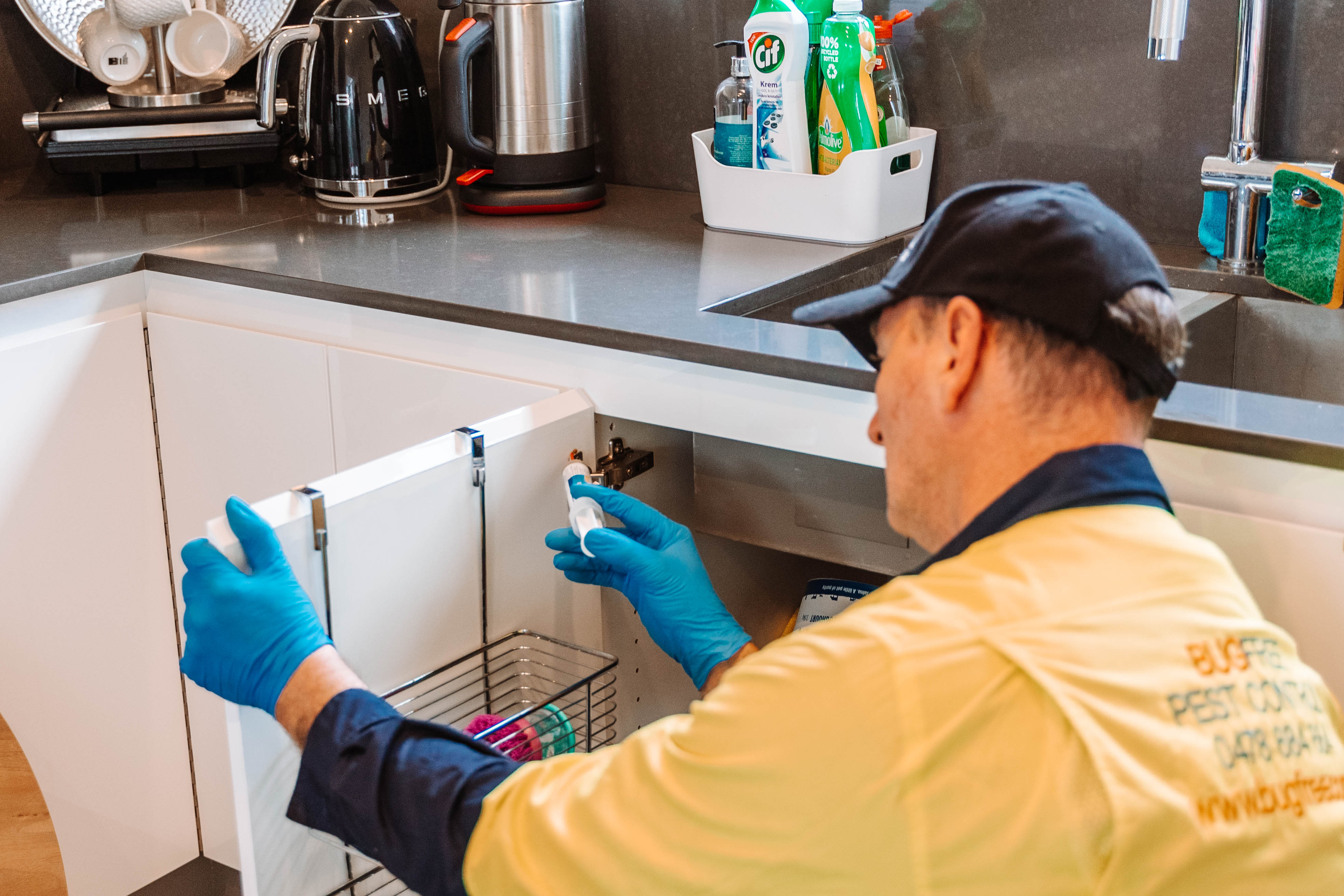
Licensed pest controllers retain access to SGAR products under the APVMA’s restricted chemical product framework, deployed in secured, tamper-resistant bait stations. These stations are designed to prevent access by children, pets, and non-target native wildlife. We also have access to non-anticoagulant rodenticides and mechanical trapping systems, where appropriate for the property type.
3. Entry point assessment and recommendations
After treatment, BugFree provides written recommendations for exclusion work — sealing the specific gaps and entry points that allowed rodent access. This step is what prevents re-infestation. Without it, new rodents will move into the vacated territory within weeks.
One thing worth noting: if a rodent dies inside a wall cavity after treatment, the smell can be significant. Our post on how to cope with dead rodent smell covers what to expect and what you can do.
Sydney Properties That Are Higher Risk This Autumn
Not all properties carry the same level of rodent risk. In our 30-plus years working across Sydney, these are the property types that typically see the worst autumn infestations:
Federation and pre-war homes (Inner West, Eastern Suburbs, North Shore)
Older properties with subfloors, timber frames, and original sarking have many more entry points than modern builds. The subfloor alone can provide 10 to 15 separate access points. Our general pest control page covers what a full-property treatment involves for homes of this age.
Properties backing onto bushland (Hills District, Northern Beaches, Sutherland Shire)
As leaf litter and garden debris cool in autumn, rodents move from outdoor habitats toward heated structures. Acreage and semi-rural properties are consistently among our highest rodent call-out areas. See our full list of service areas across Sydney to confirm we cover your suburb.
Strata apartments in Western Sydney (Parramatta, Liverpool, Blacktown)
Shared plumbing risers and service ducts between floors allow rodents to move vertically through multi-storey buildings. An infestation in one unit can spread quickly. BugFree offers strata pest control programs designed specifically for these situations.
Properties near restaurants, cafes, or food retail (CBD fringe, Surry Hills, Newtown)
Rodents from adjacent commercial food premises move into residential properties as temperatures drop. If you manage a commercial property or food service business, autumn is the time to schedule your pre-season treatment.
What You Can Do Right Now
While professional treatment is the most effective response to an active or suspected infestation, there are immediate steps that reduce risk.
Eliminate food sources. Store all dry goods in sealed containers. Do not leave pet food out overnight. Clean up fallen fruit from garden trees. Our post on foods that invite pests into your home is worth a read if you want to understand what is attracting them in the first place.
Reduce harbourage. Clear storage from garage corners, under decks, and around the subfloor perimeter. Dense garden beds against the house wall give rodents a staging point close to the structure.
Do a basic entry point check. Walk the perimeter of your property and look for gaps around pipes, cables, vent screens, and where the roof line meets fascia boards. A pencil can fit through a gap large enough for a mouse. Steel wool or galvanised mesh is a short-term stopgap measure while you wait for a professional assessment.
Do not place loose bait in roof voids. Uncontained bait in roof spaces is a safety and legal risk. Our guide to rat infestations explains why placement method matters as much as the product itself.
Also read: our essential winter pest control tips cover the broader context of keeping your home pest-free as temperatures drop.
Frequently Asked Questions
Are all rat baits banned in Australia from March 2026?
No. Second-generation anticoagulant rodenticides (SGARs) have been restricted to licensed operators only since 26 March 2026. First-generation products containing warfarin may still be available to the public in the short term, but their efficacy for established infestations is significantly lower. Non-chemical methods such as snap traps remain available without restriction. See our full rat bait ban guide for a complete breakdown.
Can I still use rat bait I already have at home?
The APVMA restriction applies to the sale and supply of SGAR products, not existing domestic stocks. However, using SGAR products outdoors or in unsecured locations is prohibited under the new conditions effective 24 March 2026. If you are unsure about the products you have, call BugFree for advice on 1300 855 548.
How do I know if I have roof rats or Norway rats?
Roof rats are slender, with large ears and a tail longer than their body. They are climbers and are almost always found in upper structures. Norway rats are heavier, with smaller ears and a shorter tail. They burrow and are typically found at ground level. Both require professional treatment. Our post on types of rodent pests covers the differences in identification in detail.
Is pest control safe for children and pets?
Yes, when applied by a licensed professional. BugFree uses tamper-resistant bait stations in all roof and subfloor applications. For more detail on how treatments are carried out safely, read our FAQ on whether pest control sprays are safe around children and pets.
How quickly can BugFree attend?
We service every Sydney suburb seven days a week from 7 am to 8 pm and can often attend the same day for active infestations. Book online or call 1300 855 548.
Book a Rodent Inspection Before the Season Peaks
Every autumn follows the same pattern. Rodents move in during April and May. By June and July, calls spike. By August, the infestations we are treating are significantly larger and more costly to resolve than the ones we catch early.
This year, with over-the-counter baits restricted and rodent pressure unchanged, the case for professional treatment early in the season is stronger than it has ever been.
BugFree has been protecting Sydney homes since 1990. We are a family-owned business, not a franchise. When you call 1300 855 548, you speak directly to our Sydney team. When our technician arrives, they are fully licensed under NSW EPA Licence 5074197 and equipped to deal with the problem on the day.
Book online or call 1300 855 548.
We service every Sydney suburb from Penrith and Parramatta to the Northern Beaches, Sutherland Shire, Hills District, Canterbury-Bankstown, and the Eastern Suburbs. Find your suburb here.
BugFree Pest Control is a licensed NSW pest management business (EPA Licence 5074197). All pest management products used are approved under Australian Pest Management Standards.
Residential & Domestic
Professional services with affordable Prices
Our fully licensed and experienced technicians will provide you and your family members with a pest control treatment catered for you and your home.

Commercial Pest Control
100% environmentally safe and friendly
All our chemical treatments are approved under Australian Standards so you can be confident of a safe and quality outcome.